A Walk with Frank O’Hara: Poems (August 2024 from University Of New Mexico Press/Mary Burritt Christiansen Poetry Series.)
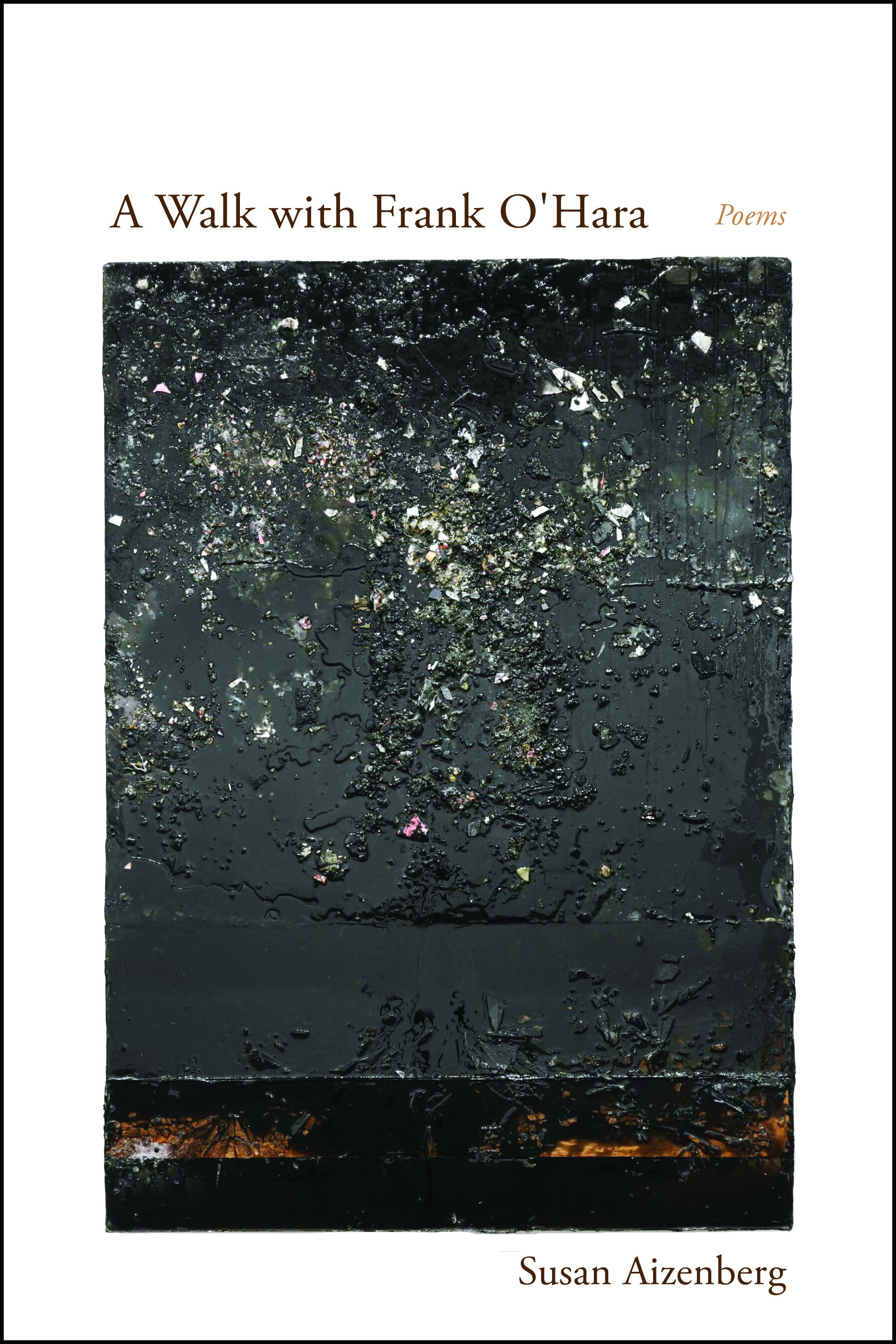
“Susan Aizenberg is a poet with a wonderfully distinct voice—the poems in A Walk With Frank O’Hara have that difficult-to-achieve illusion of effortlessness I deeply admire, with no fussiness or straining for effect, but rather a clean elegance that allows Aizenberg’s natural lyricism to shine. For all of this book’s grappling with grief, old wounds, and gritty landscapes, there’s an appealing sense of romance that runs through the poems, a lushness that never overheats, and a lovely cinematic quality to the images that always knows where the luminous shot is within any scene. Aizenberg is one of the most accomplished poets writing in America today.” – Erin Belieu, author of Come-Hither Honeycomb: Poems.
“From the daring and defiance of a 60’s adolescence and coming-or-age, to a sensibility made capacious by adult burdens and a nearly helpless awareness of others’ suffering, this collection reflects a personal history not so much as chronology as collage, a construct of superimpositions that holds its own light. I am reminded of a Klimt painting—so much rich color, so much illumination, in its layers of reminiscence, observation, and the hard facts of history. We meet Frank O’Hara, Phil Ochs and the Vietnam war; we meet the rough work of witnessing the decline of a parent; we get glimpses of Pandemic denial and the anguish captured in film clips from a re-captured Afghanistan …. These beautifully detailed yet restrained poems smolder with the force of resistance—against “good-girl rules,” against the indignities of death, against what the news brings us every day. Aizenberg’s is a sensibility grown brave, empathic, and supple, flinching from nothing, and able to hold but not surrender to the pain of not flinching. – ”—Leslie Ullman, author of Unruly Tree: Poems.
“In A Walk with Frank O’Hara and Other Poems, Susan Aizenberg embraces influences—including Lucille Clifton, Denise Levertov, Stephen Dunn, Adam Zagajewski, Adelia Prado, and Louis Simpson—to create exquisite narratives about human freedom. Freedom from prison and poverty, freedom from gender expectations. From Vietnam to Afghanistan, she contemplates America’s legacy of war, its romances (he spun his litany of better/days, before I was born, when he flew/the Atlantic, navigating, he said, by the stars) and realities (He’s loaded/on whatever he’s taken in the bathroom and drinking/from the bottle). Her poems shimmer with clarity. Her meditations marvel. Aizenberg opens her book with the peripatetic method and continues her journey through memory and misremembering, through family lore and folklore, other poets her constant companions. ”—Denise Duhamel, author of Second Story.
Review by Charles Holdefer in Exacting Clam:
https://www.exactingclam.com/issues/no-15-winter-2024/susan-aizenbergs-ema-walk-with-frank-oharaem/
Selected as one of her favorite poetry books in 2024 by Maggie Smith:
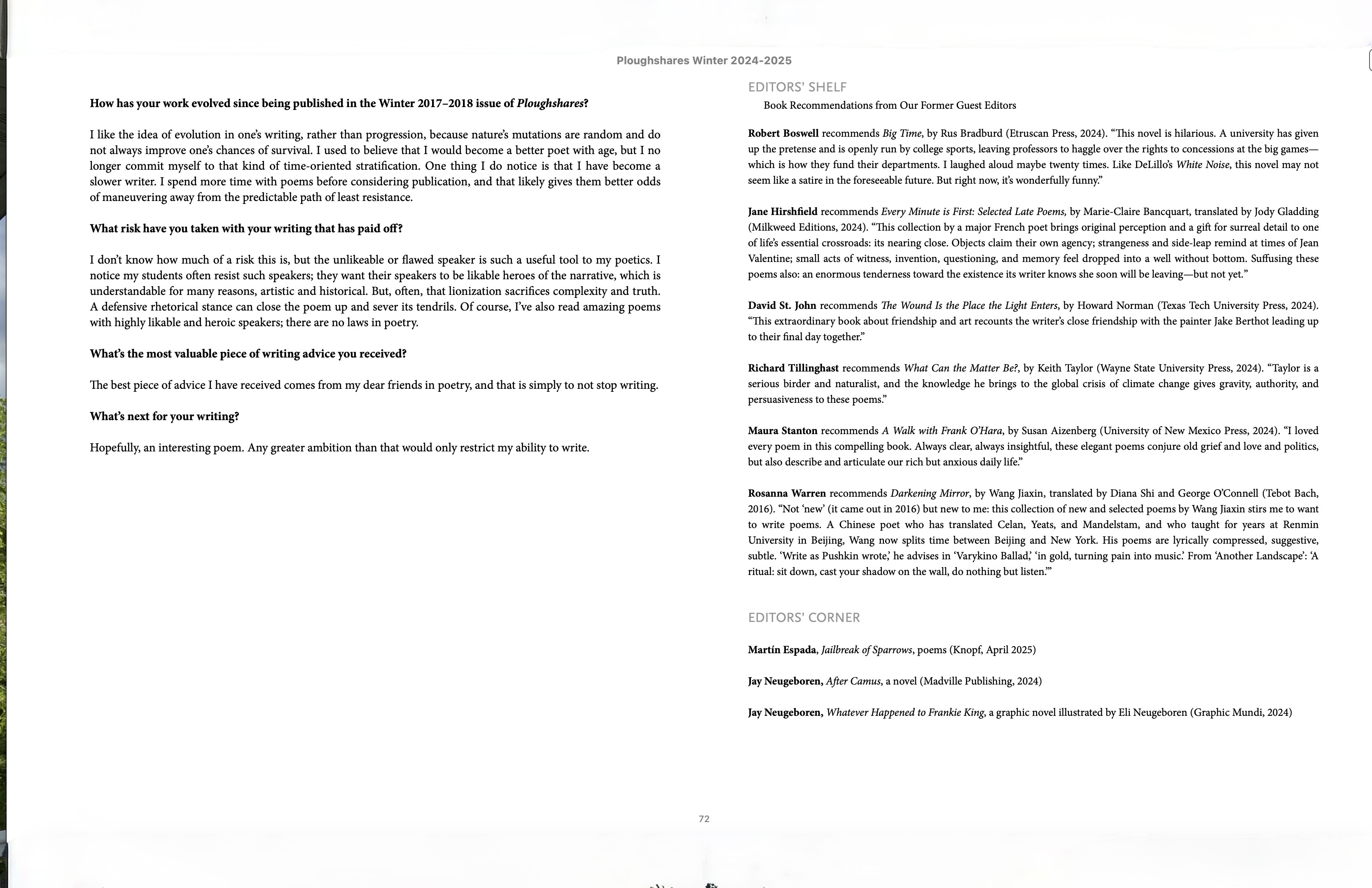
Chosen by Maura Stanton for The Editors’s Shelf in the Winter 2024/25 Issue of Ploughshares:
Available from Prairie Lights Books: https://www.prairielights.com/book/9780826366665; University of New Mexico Press: https://www.unmpress.com/9780826366665/a-walk-with-frank-ohara; Bookshop.org, Amazon, and Barnes and Noble.
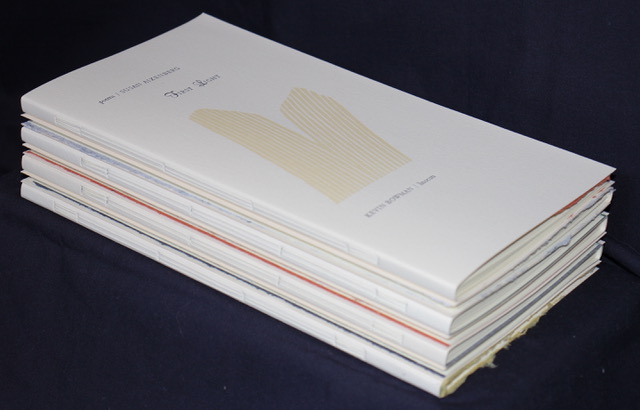
First Light, Gibraltar Editions (July 2020) http://www.gibraltareditions.co Available from Prairie Lights Bookstore, Iowa City, http://www.prairielights.com or directly from Gibraltar Editions.

“When Susan Aizenberg opens the door for you into one of her poems, it’s not simply to show off her artistry, which is always a current flowing, nor does she limit her focus solely to the most bizarre subjects in order to dazzle and put you off balance, though she does deliver the strongest and strangest experiences with great intensity, at times mixing humor and pain in equal measure. But beyond those gathered forces, her work grabs you up to transport you to a state of awakened sensibility that’s rich with emotional and philosophical connection. And isn’t that why we read? This book delivers a powerful encounter with our mortality and fragility, which the final illness and death of a parent inevitably brings on with great force, and which every day must be faced, if possible, in poems of great honesty and sensitivity, life-giving and life-loving, knowing “what must be allowed” and standing up for it in first light.” — Gregory Donovan, author of Torn from the Sun and founding editor of Blackbird: an online journal of Literature and the Arts.
“These are poems about coming of age and coming to terms with being and losing a parent. A young woman in 1970 watches “the morning sky flare and blacken over the draft board.” A mother visits her son in jail, carrying “a brown paper sack like the ones / I’d packed your school lunches / in, but this one holds the public defender’s / recommendations: toothbrush, comb, / a pack of Lucky Strikes.” A daughter keeps vigil as a mother begins “in earnest the hard/ work of [her] dying.” In the title poem, the speaker calls a student’s handmade gift “[a]nother love I did not earn.” With the tender yet unflinching poems in First Light, Aizenberg has earned her readers’ love.” — Erin Murphy, author of Human Resources.
“In these pages the smallest thing is blessed with vision so that first light itself is also last light and all the variable light which helps a person from one increment of human understanding to the next. Here, the smallest incident and the largest events are equally lived through: a mother is dying, has died; a girl plays her records in the privacy of her bedroom and only she knows the secret of what she hears. Faraway children are exploited for their almost-nothingness, and a young man survives Vietnam, but not much else. Susan Aizenberg drops into her life almost unexpectedly while the poems lean into each other threaded by this poet’s sensibility and her gathering of great feeling into a whole, fluid experience for the reader.” — Jody (Pamela) Stewart, author of Ghost Farm.
![1.30.15.Aizenberg.Cover front[4]](https://susanaizenberg.com/wp-content/uploads/2015/01/1-30-15-aizenberg-cover-front4.jpg)
QUIET CITY
“The poems in Susan Aizenberg’s Quiet City are nothing less than luminous. Her vision is clear, her language exact, and her music perfectly pitched, whether she’s writing about how we wound each other or how we make of our wounds art. While it would seem beauty is a flimsy stay against the violence of history, these poems show us otherwise with their profound attention and care for detail, their way of binding empathy to loss. These are keenly intelligent poems, navigating the distance and circuitous route between grief and it’s redemption.” — Betsy Sholl
Quiet City (June 1 2015). Available from http://www.prairielights.com ,IndieBound, Powell’s Books, Amazon, https//bkmkpress.org and Small Press Distribution.
“The noirish glamour of America’s mid-twentieth century regains its brutal edge in Susan Aizenberg’s Quiet City, and reminds us how the wounds of history keep on wounding, both in our homes and the larger world. Across state lines and class lines, from childhoods to prisons, Aizenberg’s poems make clear for us, with excruciating eloquence, how we were, and are, a desperate people, complicit and compassionate by turns. Quiet City is a fearsome book, rejecting nostalgia and implicating us all in the ‘hurricanes of time.'” —Kathy Fagan
“One of the most powerful poems in Susan Aizenberg’s extraordinary new collection is ‘Toward an Autobiography of My Imagination,’ but don’t let that title fool you: while many of the poems in Quiet City parse her personal history, and do so beautifully, her imagination goes well beyond autobiography. As in her first collection, Muse, which featured stunning poems about Van Gogh and T.S. Eliot’s wife Vivienne, Aizenberg imagines her way into the minds and hearts of a wide
variety of others, including Tennessee Williams, Truman Capote, Roman Vishniac and the Warsaw Jews he photographed, Dust Bowl survivors, the mother of a teenage boy shot dead by police, the nineteenth-century inmates of a Quaker penitentiary, and a fictional member of a group like the Weather Underground. In poem after poem, she reveals an astonishingly wide-ranging and deeply empathetic imagination, not to mention the eye of a painter and the ear of a musician. If you read this book, you will not only be moved, you will be changed. And if you don’t read it, you will have missed one of the best books of poetry to appear in years.” — David Jauss
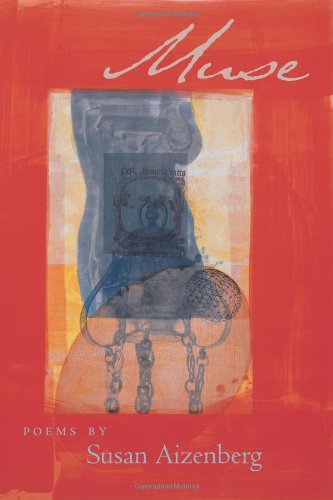
Muse. (Southern Illinois University Press/Crab Orchard Poetry Series, 2002). Available from, Powell’s, Amazon and IndieBound.
“Miraculous … her muse is most benevolent. “— Denise Duhamel, Painted Bride Quarterly
“How can art and life coexist? This is one of the big questions that Susan Aizenberg raises in the superbly crafted, deeply felt poems of Muse. From a beautiful elegy for the poet Lynda Hull to a brilliant sequence on Vivian Eliot, we are moved by narrative, delighted by the music of speech, and dazzled by glittering imagery. But ultimately Aizenberg forces us to confront disturbing questions about how the aesthetic can be reconciled with the ethical. She faces these questions unflinchingly. They are the heart of her enterprise. A real, three-dimensional human being emerges out of the phrasing, the images, and the thoughts of these memorable poems, shaped out of words but entangled in the gritty detail of ordinary life.”—Maura Stanton, author of Glacier Wine
“Clearly Susan Aizenberg has chosen to serve the most demanding of the nine muses, Clio, the muse of history. Aizenberg honors her with rich and vital poems of personal history, elegy, and what could be called Lyrics of the Long Haul—poems of the middle years, poems which testify to the difficulties of grace and the precious arrival of wisdom. This is an elegant and sustained volume. More importantly, it is an instructive one.”—David Wojahn, author of The Falling Hour
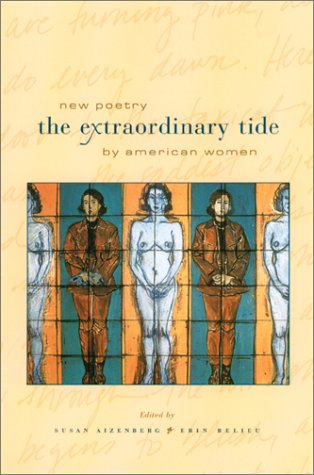
The Extraordinary Tide: New Poetry by American Women. co-editor with Erin Belieu. (Columbia University Press, 2001). Available from Powell’s, Amazon and IndieBound.
“The delights of this anthology are in its plurality, its collection of such a rich and varied sampling of that tide flooding American shores.”–from the Foreword by Eleanor Wilner.
“The Extraordinary Tide is an extraordinary and important anthology that anyone interested in contemporary American poetry will want to read and cherish. The voices in this book are diverse; the kinds of poems gathered here are various in style and subject. But the one assumption that underlies and animates every line of every poem is that inclusiveness, intellectual and imaginative restlessness, impurity and radical play are the life blood of our language and our literature, renewing the very conventions and traditions they resist. Contemporary American women poets have given a great gift to all students of poetry, to all of us who go to poetry for news of what it means to be a human being at this moment in our history.” Alan Shapiro
“It has been too long since such a comprehensive collection was published, and anyone who cares about women’s poetry should read it…. This book deserves a place on your bookshelf alongside the Norton and Oxford anthologies.” – San Diego Union Tribune

 Susan Aizenberg
2 thoughts on “Books”